
Table of Contents
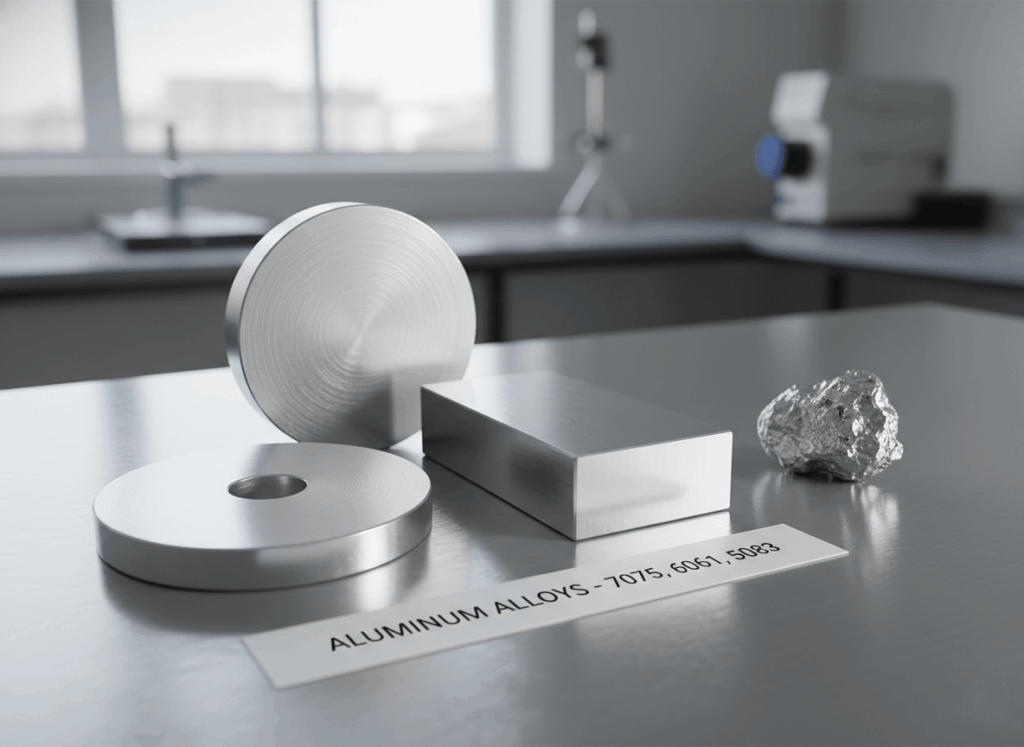
Aluminum alloys are the quiet revolution behind modern design, strong yet light, versatile yet sustainable. From aircraft fuselages to robotic arms, these materials shape the way the world moves, connects, and builds. But not all aluminum is equal. The right alloy determines how your product performs, how it looks, and even how fast you can bring it to market. This guide explores the properties, grades, applications, and sourcing insights that help you choose aluminum alloys not just by cost, but by purpose.
Key Properties of Aluminum Alloys
Few materials balance lightness, strength, and resistance like aluminum. When alloyed with elements such as magnesium, silicon, copper, or zinc, it transforms from a soft metal into one of the most versatile engineering materials on earth. These combinations define not just strength, but how the material reacts to heat, pressure, corrosion, and forming.
Modern aluminum alloys sit at the center of industries that demand both performance and sustainability, from aerospace and EVs to smart robotics and renewable energy. Understanding their properties is the foundation of selecting the right grade for your next build or product.
Mechanical vs Physical Properties
Aluminum alloys offer a unique balance between mechanical strength and physical adaptability. Below are the most critical parameters that engineers and sourcing teams must understand when evaluating specifications or comparing grades.
1. Strength-to-Weight Ratio
Aluminum’s greatest advantage is its specific strength, high mechanical strength relative to its density. With a density of ~2.7 g/cm³, it weighs only one-third as much as steel, yet heat-treated grades such as 7075-T6 can exceed 500 MPa in tensile strength. This makes aluminum essential for aerospace frames, robotic arms, and lightweight structural components where performance per gram defines success.
The high strength-to-weight ratio doesn’t just reduce weight; it reduces energy consumption during acceleration, lifting, or flight. Every gram saved upstream often multiplies into downstream savings, smaller motors, lower torque, lower battery demand.
2. Corrosion Resistance
Pure aluminum naturally forms a thin oxide film that protects it from further oxidation. When alloyed with magnesium or silicon (as in the 5xxx and 6xxx series), corrosion resistance improves even more. This makes aluminum alloys the metal of choice for outdoor structures, marine components, and chemical processing equipment.
However, not all grades resist corrosion equally:
- 2xxx series (copper-based) alloys, while strong, are more prone to corrosion and often require cladding or coating.
- 5xxx series (magnesium-based) alloys resist saltwater exceptionally well.
- Anodizing further enhances surface protection by thickening the oxide layer and allowing color finishes.
3. Thermal and Electrical Conductivity
Aluminum’s excellent conductivity makes it indispensable in heat exchangers, EV busbars, and LED housings.
- Thermal conductivity: ~235 W/m·K (about twice that of stainless steel).
- Electrical conductivity: ~60% of copper but with half the weight, a key reason it’s replacing copper in many large-scale power systems.
When designed properly, aluminum components dissipate heat efficiently without adding weight or complexity, crucial in electric vehicles, robotics, and high-speed computing hardware.
4. Fatigue and Elastic Modulus
Though lighter than steel, aluminum’s modulus of elasticity is roughly one-third that of steel (~70 GPa vs. 210 GPa). This means it flexes more under load, an important consideration in high-vibration systems. However, modern alloy design compensates through geometry: thicker profiles, ribbed reinforcements, or hybrid composites.
In cyclic or high-load environments (aerospace wings, robot joints), high-strength alloys like 7075-T6 or 2024-T3 maintain excellent fatigue resistance when properly heat-treated.
5. Ductility and Formability
Aluminum’s ductility allows engineers to form complex shapes without cracking. It can be rolled into foil thinner than a human hair or extruded into multi-channel profiles for heat sinks, architectural beams, or battery casings.
Formability depends heavily on alloy composition and temper:
- Non-heat-treatable alloys (e.g., 1xxx, 3xxx, 5xxx) rely on strain hardening.
- Heat-treatable alloys (2xxx, 6xxx, 7xxx) achieve high strength via controlled thermal cycles.
For sourcing teams, this means knowing not just the alloy number, but the temper code (e.g., T6, H32, O). Two suppliers offering “6061 aluminum” can deliver vastly different mechanical outcomes depending on temper.
Machinability and Formability
While machinability and formability overlap with mechanical properties, they directly influence cost, precision, and lead time, the three metrics sourcing managers care most about.
1. Machinability in Practice
Aluminum’s low hardness (compared to steel) means it cuts faster, requires less energy, and extends tool life.
Grades like 6061-T6 or 2011 are favorites in CNC milling and turning due to their excellent chip control and surface finish.
However, cutting speed alone isn’t enough, the right lubrication and chip evacuation determine quality.
Common tips:
- Use high rake angles on cutting tools.
- Apply water-soluble lubricants to prevent built-up edge.
- Employ high spindle speeds (3–5× steel) for optimal finish.
For high-volume OEM production, these efficiencies compound into massive time savings.
2. Formability and Joining
Formability governs how easily an alloy can be shaped by stamping, bending, or extrusion.
- 5xxx series: excellent for deep drawing and marine panels.
- 6xxx series: widely used for automotive frames and architectural extrusions.
- 7xxx series: less formable but unmatched in structural strength.
Joining is equally critical. Aluminum alloys can be:
- Welded (TIG/MIG) for structural assemblies.
- Brazed for heat exchangers.
- Bonded or riveted when distortion must be minimized.
3. Surface Treatments
Once shaped, aluminum alloys can be surface-engineered for both protection and branding:
- Anodizing: enhances corrosion resistance and allows color branding.
- Powder coating: provides UV stability and tactile feel.
- Electropolishing or brushing: delivers high-end finishes for consumer electronics.
These finishing steps often differentiate a commodity part from a premium product.
For sourcing professionals, it’s important to confirm whether surface treatments are performed in-house or outsourced, as this affects both quality control and logistics.
Popular Aluminum Alloy Grades and Standards
Every aluminum alloy tells a story, a blend of elements fine-tuned to balance strength, formability, conductivity, and corrosion resistance. Understanding the classification helps you read a material’s “DNA” before you even cut the first billet or order a sample.
Aluminum alloys are categorized by the four-digit numbering system established by the Aluminum Association (AA) and harmonized with international standards such as ASTM B209, EN 573, and GB/T 3190.
Each series (1xxx–8xxx) represents a family with distinct chemistry, temper codes, and mechanical characteristics.
Overview of 1xxx–8xxx Series
| Series | Main Alloying Element | Key Property | Common Applications | Notes |
|---|---|---|---|---|
| 1xxx (Pure Aluminum) | ≥99% Al | Highest electrical & thermal conductivity, superior corrosion resistance | Electrical conductors, chemical equipment, reflective surfaces | Soft, non-heat-treatable |
| 2xxx (Al–Cu) | Copper | Very high strength, excellent fatigue resistance | Aerospace, military, high-performance frames | Requires surface protection |
| 3xxx (Al–Mn) | Manganese | Good corrosion resistance, medium strength | Beverage cans, HVAC fins, panels | Excellent formability |
| 4xxx (Al–Si) | Silicon | Low melting point, good wear resistance | Welding wire, automotive components | Often used as filler alloy |
| 5xxx (Al–Mg) | Magnesium | Strong, weldable, corrosion-resistant | Marine, pressure vessels, truck bodies | Not heat-treatable |
| 6xxx (Al–Mg–Si) | Magnesium & Silicon | Balanced strength, easy extrusion, heat-treatable | Automotive, architecture, robotics | Widely used, versatile |
| 7xxx (Al–Zn) | Zinc (with Mg/Cu) | Ultra-high strength | Aerospace, bicycle frames, defense parts | Prone to stress corrosion |
| 8xxx (Other) | Lithium, Iron, Tin | Specialty light-weighting alloys | Aerospace, EVs, cable sheathing | Experimental or niche |
Each family is like a language: 1xxx speaks in conductivity, 5xxx in weldability, 7xxx in strength. Choosing the right one is less about picking the “best” and more about finding the right compromise between mechanical needs, processability, and cost.
High-Strength vs Lightweight Alloys
In sourcing, the trade-off is rarely between “good” and “bad” aluminum, it’s between stiffness and simplicity, speed and price, or performance and manufacturability.
2xxx Series (Al–Cu Alloys)
These are among the strongest aluminum alloys grades available and are typically used in aerospace structures and precision machined parts.
- 2024-T3 is a classic for aircraft skins, tension members, and robotics actuators.
- Pros: High strength, good fatigue resistance.
- Cons: Poor corrosion resistance, must be coated, anodized, or alclad.
- Notable standard: AMS-QQ-A-250/4 (2024-T3 sheet & plate).
5xxx Series (Al–Mg Alloys)
Known for outstanding corrosion resistance and weldability, 5xxx series alloys excel in marine and transportation.
- 5052-H32 is widely used for chemical tanks, marine hulls, and consumer enclosures.
- 5083-H116 withstands saltwater exposure without surface degradation.
- Pros: Excellent for sheet forming and bending.
- Cons: Strength decreases above 65 °C due to grain boundary softening.
6xxx Series (Al–Mg–Si Alloys)
The true workhorse family, found in everything from automotive body panels to robotics frames.
- 6061-T6: The most popular general-purpose alloy; offers balanced strength, corrosion resistance, and ease of machining.
- 6063-T5: Favored for architectural extrusions and visible surfaces due to excellent anodizing finish.
- Pros: Easily extruded and heat-treatable.
- Cons: Moderate strength compared to 2xxx or 7xxx.
7xxx Series (Al–Zn–Mg–Cu Alloys)
The ultimate high-performance family, designed for maximum tensile strength and stiffness.
- 7075-T6 combines extreme strength (~570 MPa tensile) with excellent fatigue life.
- Common in aircraft landing gear, bicycle frames, and robot joints where stiffness and weight are both critical.
- Cons: Limited corrosion resistance, higher cost, and more complex heat-treatment process.
Aerospace-Grade Alloys (2024, 7075)
The aerospace industry set the gold standard for aluminum alloys.
2024-T3 and 7075-T6 remain two of the most recognized high-strength alloys worldwide.
| Property | 2024-T3 | 7075-T6 |
|---|---|---|
| Density (g/cm³) | 2.78 | 2.81 |
| Yield Strength (MPa) | 325 | 480 |
| Ultimate Tensile (MPa) | 470 | 570 |
| Elongation (%) | 20 | 11 |
| Corrosion Resistance | Moderate | Fair |
| Typical Use | Aircraft skins, wing structures | Landing gear, robotics actuators |
- 2024-T3 is copper-rich, giving excellent fatigue strength, critical for cyclic loads.
- 7075-T6, alloyed with zinc and magnesium, achieves near-steel strength at one-third the weight.
For modern robotics, 7075 often replaces steel in precision actuators, reducing payload mass without sacrificing stiffness, a classic case where material intelligence becomes design advantage.
Automotive & Industrial Alloys (5052, 6061)
Automotive and industrial designers look for alloys that are easy to form, weld, and anodize at scale. 5052-H32 and 6061-T6 dominate these categories due to their availability, cost efficiency, and consistency across suppliers.
5052-H32: The Corrosion-Proof Workhorse
- Ideal for fuel tanks, marine components, and outdoor enclosures.
- Weldable with minimal cracking; retains good strength in welded zones.
- Anodizes well for matte or bright finishes.
6061-T6: The All-Rounder
- Common in bike frames, drone chassis, and CNC parts.
- Can be both welded and machined, a rare combination.
- Excellent dimensional stability after heat-treatment.
6061 vs 7075: 6061 wins in cost and corrosion resistance; 7075 wins in pure strength. The right choice depends on whether your product’s critical metric is load-bearing or lifecycle cost.
Emerging Alloys and Specialty Standards
- Al-Li (Lithium-based 8xxx series): Up to 10% lighter than conventional alloys, increasingly used in aerospace and EV battery enclosures.
- High-conductivity 1350 aluminum: Used in busbars and transformer windings where electrical efficiency outranks strength.
- High-recycled content alloys: Gaining traction for ESG-compliant sourcing, offering 70–80% lower carbon footprint with minor trade-offs in mechanical performance.
Fabrication and Sourcing Considerations
Selecting the right alloy is only half the equation. How that alloy is processed, fabricated, and supplied determines your real performance, cost, and time-to-market. From prototype runs to mass production, every fabrication route has its own trade-offs in surface quality, tolerance, lead time, and capital cost. At Yana Sourcing, we’ve learned that the smartest sourcing isn’t about finding the cheapest supplier, it’s about aligning fabrication capability with product intent.
Casting, Extrusion, and Rolling Techniques
Each production route creates its own “fingerprint” in grain structure and mechanical performance. Knowing these differences helps avoid mismatched expectations — like ordering cast-grade aluminum alloys for a precision-machined part.
1. Casting: For Complex Geometry and Volume
Casting is the oldest and most flexible method of forming aluminum alloys. Molten aluminum is poured into molds, permanent, sand, or die, depending on scale and precision needs.
- Alloy Families: 3xx.x (Al–Si–Mg) are common; silicon lowers melting temperature and improves fluidity.
- Advantages: Low tooling cost for small runs; allows intricate shapes and integrated features.
- Limitations: Porosity, lower mechanical strength, and slower machining response.
- Typical Uses: Motor housings, enclosures, and intricate heat sinks.
Pro tip: When sourcing cast components, always request a porosity inspection report or CT scan sample. Hidden voids often explain downstream quality issues.
2. Extrusion: The NPI Accelerator
Extrusion is the heartbeat of modern aluminum design, forcing heated billets through dies to create continuous profiles.
- Alloy Families: 6xxx (especially 6061, 6063) dominate due to excellent flow and heat treatability.
- Advantages: Outstanding dimensional consistency, short lead times, and cost-effective tooling.
- Limitations: Cross-section constraints; thick or asymmetric shapes may warp.
- Typical Uses: Structural frames, robotics arms, architectural profiles, battery housings.
Extrusions are ideal for NPI (New Product Introduction) programs: one die can yield dozens of prototypes before scaling up.
Yana Sourcing’s network in Shenzhen, Foshan, and Ningbo routinely achieves 72-hour extrusion-to-anodized sample cycles, turning what used to take months into days.
3. Rolling and Forging: For Strength and Uniformity
Rolling transforms aluminum ingots into sheet or plate form, aligning grain direction for improved strength and surface uniformity.
- Rolled Alloys: 5xxx and 6xxx dominate for automotive panels and enclosures.
- Forging: Used for aerospace and high-load parts; it compresses grains to eliminate porosity, achieving near-isotropic strength.
- Typical Uses: Aircraft fittings, suspension arms, and robotics couplers.
Note: Always specify grain direction for load-bearing plates, improper orientation can halve fatigue life.
4. Additive and Hybrid Manufacturing
Emerging methods like Wire Arc Additive Manufacturing (WAAM) and Selective Laser Melting (SLM) now allow large-scale aluminum 3D printing.
- Strengths: Design freedom, zero tooling, reduced material waste.
- Challenges: Surface finish and residual stress management.
Yana Sourcing collaborates with advanced foundries that combine casting + machining or additive + rolling to bridge precision and cost, the next frontier in agile manufacturing.
Surface Finishing and Treatment
In sourcing, appearance and durability often define brand perception as much as raw strength. Surface finishing transforms technical aluminum alloys into a premium, corrosion-resistant, and brand-defining material.
- Anodizing: Creates a hard oxide layer; color options from silver to champagne to black.
- Powder Coating: Thicker coating for UV protection and scratch resistance.
- Brushing & Electropolishing: Used in consumer electronics for tactile elegance.
- Chemical Conversion (Alodine): Ensures conductivity for aerospace and electronics.
Yana Sourcing Tip: Verify if finishing is done in-house or outsourced. In-house finishing shortens QA loops and reduces handling damage by up to 20%.
Domestic vs International Suppliers
The aluminum alloys supply chain is both global and hyper-local. Where you source determines not just price, but lead time, certification, and logistics reliability.
Domestic Suppliers
Ideal for low-volume or fast-turn projects, especially when:
- Rapid design iteration matters more than cost per kilogram.
- Short communication loops reduce language or time-zone delays.
- You need same-week turnaround for prototypes.
However, domestic mills may have limited alloy variety or higher MOQ for specialized tempers.
International Suppliers (China, ASEAN, EU, US)
Best suited for scalable production where consistency and value matter.
China, in particular, dominates global aluminum alloys extrusion and billet production thanks to:
- Full vertical integration (smelter → die shop → anodizing → CNC).
- Broad alloy availability (including 2xxx and 7xxx series).
- Lower die and machining costs, often 50–70% below Western markets.
ASEAN countries (Vietnam, Thailand, Malaysia) are increasingly attractive for tariff diversification and near-shoring strategies for Western brands.
Key Tip: Always verify certifications and traceability:
- Quality: ISO 9001, IATF 16949
- Environmental: ISO 14001, RoHS, REACH
- Aerospace: AS9100, NADCAP
Yana Sourcing maintains supplier audit records across multiple regions, ensuring that your BOM can flex between suppliers without requalification delays.
Lead Time, MOQ, and Cost Optimization
| Process | Typical MOQ | Tooling Lead Time | Per-Part Cost Trend | Notes |
|---|---|---|---|---|
| Casting | 50–200 pcs | 2–4 weeks | Low for volume | Watch for shrinkage |
| Extrusion | 100–300 pcs | 5–10 days | Moderate | Ideal for iterative design |
| Rolling (Sheet/Plate) | 500+ kg | Stock material | Stable | Good for CNC cutting |
| Forging | 100–500 pcs | 3–6 weeks | High | Best strength, longest prep |
| Additive | 1–10 pcs | None | High | Perfect for rapid prototype |
Cost Strategy Insight:
The most expensive aluminum alloys part isn’t the one that costs most per kilogram, it’s the one that delays your launch. Fast, right-sized sourcing often beats purely cheap sourcing.
That’s why at Yana Sourcing, we help clients map the NPI-to-scale transition, starting with flexible, local prototyping and later migrating to high-volume international lines once the design stabilizes.
Risk and Quality Control
Even high-grade alloys can fail if quality control breaks. Common sourcing issues include:
- Alloy mislabeling (especially 6061 vs 6063).
- Inconsistent heat treatment or over-aging.
- Surface defects after anodizing due to poor die maintenance.
To mitigate these risks:
- Request mill certificates and heat lot traceability.
- Perform tensile and hardness sampling for every batch.
- For structural parts, conduct ultrasonic testing (UT) or eddy-current inspection.
Yana Sourcing incorporates these checks into our supplier qualification workflow so clients receive ready-to-machine verified materials, not just raw billets.
Choosing the Right Aluminum Alloy for Your Application
Every project begins with a design requirement, strength, weight, corrosion resistance, finish, or cost. But as the design matures, it’s not uncommon to find that the chosen material drives 30–50% of manufacturing costs. That’s why “choosing the right alloy” isn’t just a material decision, it’s a business decision, one that defines performance, profitability, and even sustainability credentials.
Cost vs Performance Trade-Offs
The first step in alloy selection is to rank your priorities:
- Do you need maximum stiffness per gram?
- Are aesthetics or anodizing more important than absolute strength?
- Will you weld, machine, or form it repeatedly?
- Is corrosion exposure marine, urban, or indoor?
Once those are clear, the alloy choice becomes logical rather than confusing.
1. 6061-T6 — The Balanced Performer
If you could only choose one aluminum alloy for general manufacturing, it would be 6061-T6.
It’s strong enough for robotics arms, light enough for drones, and weldable enough for automotive frames.
- Tensile strength: ~310 MPa
- Yield strength: ~275 MPa
- Density: 2.7 g/cm³
- Advantages: Balanced performance, easy machinability, excellent anodizing finish
- Limitations: Slightly lower strength than 7075; moderate fatigue resistance
In sourcing terms, 6061 is the lowest-risk alloy, almost every extrusion mill worldwide stocks it, which means predictable lead times and interchangeable suppliers.
2. 5052-H32 — The Corrosion-Resistant Workhorse
When the environment fights back, saltwater, humidity, or chemical exposure, 5052 shines.
With magnesium as its primary alloying element, it forms a strong oxide layer that resists corrosion even in marine atmospheres.
- Tensile strength: ~215 MPa
- Elongation: up to 20% (high ductility)
- Applications: Boat panels, fuel tanks, industrial housings, HVAC equipment
For sourcing, 5052 is a cost-effective alternative to coated steels. It’s not heat-treatable, but its cold-work hardening delivers enough strength for most structural and enclosure applications.
3. 7075-T6 — The Powerhouse Alloy
The undisputed king of high-strength aluminum alloys, 7075-T6 approaches the strength of mild steel at one-third the weight.
- Tensile strength: ~570 MPa
- Yield strength: ~500 MPa
- Hardness: ~150 Brinell
- Applications: Aerospace parts, precision robotics, sports equipment, defense hardware
Its only drawback: lower corrosion resistance and higher material cost. But when weight and stiffness define performance, such as in actuators, drone arms, or exoskeleton joints, no other alloy comes close.
4. 2024-T3 — The Fatigue-Resistant Veteran
Often used in aerospace and aircraft skins, 2024-T3 provides superior fatigue strength and damage tolerance.
- Tensile strength: ~470 MPa
- Yield strength: ~325 MPa
- Applications: Aircraft panels, tension fittings, structural parts under cyclic loading
Because it contains copper, it corrodes easily and typically needs surface treatment (anodizing or cladding).
Material Selection Framework
When comparing alloys, engineers and sourcing teams often overlook the interaction between geometry, processing, and price.
Here’s a simplified framework to make smart, defensible choices:
| Criteria | Key Metric | Best Alloys | Comment |
|---|---|---|---|
| Strength-to-Weight Ratio | MPa per g/cm³ | 7075, 2024 | Aerospace, robotics |
| Corrosion Resistance | Oxidation index | 5052, 6061 | Marine, outdoor use |
| Machinability | Tool wear rate | 6061, 2011 | CNC parts, NPI |
| Weldability | Heat input tolerance | 5052, 6061 | Frames, tanks |
| Formability | Elongation % | 5052, 1100 | Sheet forming |
| Aesthetic/Finish | Anodizing quality | 6063, 6061 | Consumer products |
| Cost Efficiency | $/kg & availability | 6061, 5052 | General purpose |
Tip from Yana Sourcing:
Never select purely by mechanical numbers, supply chain dynamics (availability, MOQ, and post-processing) often have a greater impact on final cost than material property differences.
Aluminum Alloy vs Steel Comparison
Steel and aluminum alloys are not rivals, they’re complementary tools.
But in many industries, aluminum has replaced steel due to its unique performance per unit weight.
| Property | Aluminum | Steel |
|---|---|---|
| Density | 2.7 g/cm³ | 7.8 g/cm³ |
| Yield Strength | 200–500 MPa | 250–800 MPa |
| Elastic Modulus | 70 GPa | 210 GPa |
| Corrosion Resistance | Excellent | Requires coating |
| Machinability | Easy | Moderate |
| Recyclability | ~95% | ~90% |
| Cost per kg | Higher | Lower |
| Strength-to-Weight Ratio | Superior | Moderate |
When to Choose Aluminum over Steel
- When mass reduction directly impacts performance, drones, EVs, aircraft, or robotic arms.
- When corrosion resistance matters and coating maintenance adds cost.
- When machining complexity favors soft, low-hardness materials.
- When transport efficiency outweighs raw material savings.
When Steel Still Wins
- For static structures with high compressive loads (bridges, buildings).
- Where heat resistance or rigidity are non-negotiable.
- When cost per ton is the dominant factor.
In practice, hybrid designs increasingly combine both: aluminum frames with steel inserts or composite-aluminum assemblies, balancing strength, weight, and cost.
Environmental & Regulatory Considerations
In an age where sustainability is more than a buzzword, aluminum is uniquely positioned as a circular material.
1. Recyclability and Energy Savings
- Aluminum can be recycled indefinitely without losing strength.
- Recycling consumes 95% less energy than producing virgin aluminum.
- Over 75% of all aluminum ever produced is still in use today.
For brands seeking ESG or carbon reporting compliance, specifying high-recycled-content aluminum can significantly reduce Scope 3 emissions.
2. Global Regulatory Frameworks
When sourcing aluminum alloys internationally, ensure compliance with:
- RoHS / REACH (EU): Limits on hazardous substances in coatings and finishes.
- ISO 14001: Environmental management certification.
- EPEAT / LEED: For electronics and building materials.
- Carbon Border Adjustment Mechanism (CBAM): EU regulation likely to affect aluminum imports based on carbon intensity.
3. Emerging Trends
- Low-carbon smelters in Yunnan and Iceland using hydro power are changing sourcing geography.
- Closed-loop manufacturing (recycling scrap from machining) is becoming standard for automotive and consumer brands.
- Traceability software linking billets to specific smelters is now demanded by aerospace and EV sectors.
Real-World Applications and Case Studies
Every successful product hides dozens of material decisions that few ever see, alloy series, temper, fabrication path, and supplier network.
At Yana Sourcing, we treat those choices as strategic levers: done right, they reduce lead time, lower defect rate, and extend product lifespan.
Below are real examples that illustrate how intelligent alloy selection and sourcing agility create tangible business outcomes.
Case Study 1 — Accelerating Prototype Launch with 6061-T6 Extrusions
Background:
A European startup developing a BLE-enabled industrial sensor needed a structural housing that was both lightweight and strong enough to protect internal electronics from vibration and impact. Their design required thin walls, sharp corners, and precise slot tolerances, a typical NPI nightmare.
Challenge:
Initial attempts using 7075 billets achieved mechanical strength but drove up machining time and cost. Each housing required over two hours of CNC time, and local suppliers quoted three-week lead times for small batches.
Solution:
Yana Sourcing’s Shenzhen extrusion partners re-engineered the part using 6061-T6 aluminum alloys and a custom die-extrusion route.
Within 72 hours, the first samples were anodized and tested.
By extruding near-net profiles, CNC time dropped by 68%, and per-unit cost fell by 42%.
Outcome:
The client launched pilot production in under 30 days and validated enclosure durability at 150 hours of vibration testing.
The key wasn’t cheaper metal, it was aligning alloy selection with process capability.
Case Study 2 — Aerospace-Grade Precision: 7075 in Robotic Actuators
Background:
A robotics OEM building articulated arms for inspection drones required joints that could handle high torque loads without adding mass. The previous design used stainless-steel couplers, which limited flight time and responsiveness.
Challenge:
Replacing steel with a lightweight material risked losing stiffness and fatigue life, both critical for high-frequency operation.
Solution:
Yana Sourcing identified 7075-T6 as the optimal substitution: ultra-high tensile strength (≈ 570 MPa) with proven fatigue resistance. We sourced precision-milled 7075 parts from an AS9100-certified supplier and implemented shot-peened surface treatment to improve fatigue strength by 18%.
Outcome:
The actuator assemblies achieved 42% weight reduction, 11% longer flight endurance, and passed 200 000-cycle endurance tests with zero cracking. The project demonstrated how high-strength alloys can enable entirely new mechanical architectures when backed by validated process control.
Case Study 3 — Sustainable Sourcing Through Closed-Loop Recycling
Background:
A Tier-1 automotive supplier manufacturing body-in-white subframes faced tightening ESG requirements from EU clients. Virgin aluminum alloys sourcing created both cost volatility and carbon-reporting pressure.
Solution:
Yana Sourcing partnered with a regional extrusion mill using post-consumer 5xxx and 6xxx scrap remelted into billet within a 200 km closed-loop network. We introduced traceability down to heat-lot level using digital mill certificates and QR-tagged bundles.
Outcome:
- 18% raw-material cost reduction through localized recycling
- 72% lower embodied CO₂ vs. virgin billet
- Maintained mechanical parity with standard 6061-T6 profiles
Takeaway:
Circular sourcing doesn’t have to mean compromise, it means tighter loops, smarter logistics, and better narrative for brand sustainability.
Case Study 4 — High-Conductivity Aluminum in Power Electronics
Background:
An EV component maker needed busbars with high current capacity but reduced weight. Copper was effective but expensive and heavy.
Solution:
By switching to 1350-O aluminum (99.5% Al) and redesigning cross-section geometry, Yana Sourcing achieved equal ampacity with 48% weight reduction. We coordinated die tooling and silver-plating in the same industrial park to minimize transport oxidation risk.
Outcome:
- Busbar cost down 27%
- Electrical loss decreased 2% due to smoother plating
- Lead time cut from 5 weeks → 12 days
Conclusion — The Smart Way to Source Aluminum Alloys
Aluminum alloys are not just materials, they are enablers of modern progress.
From aerospace frames and robotics arms to EV chassis and precision enclosures, every grade, temper, and treatment represents a trade-off between performance and manufacturability. Understanding those trade-offs is what separates procurement from strategy.
At Yana Sourcing, we help brands, engineers, and founders navigate this complexity with clarity. We combine field insight from China’s manufacturing ecosystems with global compliance standards, enabling our clients to:
- Match the right alloy to each production phase, from prototype to scale-up.
- Validate suppliers through traceable mill certifications and on-site quality audits.
- Balance cost, speed, and reliability across domestic and international lines.
When you choose wisely, aluminum isn’t just lighter, it makes your entire supply chain lighter. That’s the essence of smart sourcing: less friction, more velocity, and full confidence in every shipment.
Ready to Source Smarter? Let’s Build It Together
Get Expert Sourcing Support
Have a design, drawing, or material spec in hand?
Send it to us, our team will help you identify the optimal alloy grade, verify standards (ASTM / GB / EN), and connect you directly to qualified suppliers ready for production.
Partner with Yana Sourcing
Whether you’re scaling a robotics startup, redesigning an EV component, or developing aerospace hardware, Yana Sourcing acts as your extended sourcing office, from early prototype to global roll-out. We don’t just chase low prices; we build systems that help you win on quality, speed, and trust.
📩 Contact us today to discuss your aluminum alloy requirements, and turn your next material choice into your next competitive edge.