
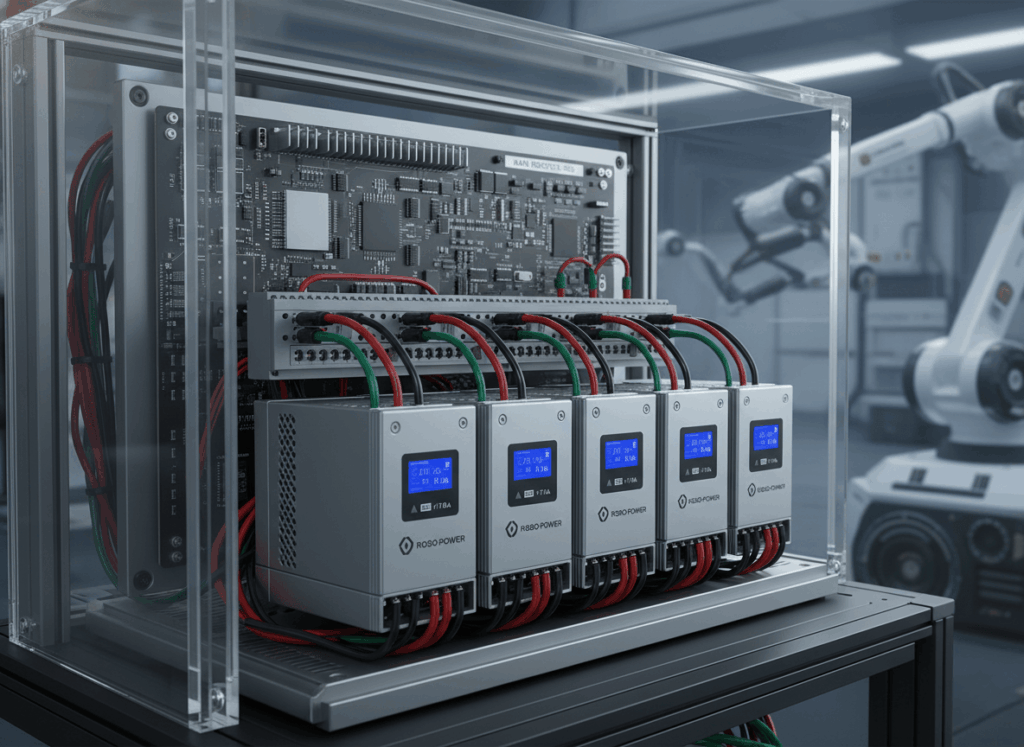
In the world of electronics and electromechanics, power is not optional; it is the lifeblood that allows circuits, motors and microcontrollers to function. Behind every processor cycle and sensor reading, power supplies quietly convert, regulate and deliver the correct voltage and current. The significance of power supplies can be seen in the way they determine not just whether a device works, but how well it works and how long it lasts. When an engineer chooses a processor, a sensor or a motor, the next question must be: how will it be powered? Without stable, reliable power supplies, even the most sophisticated circuits will falter.
1. Introduction — Why Power Supplies Matter
At its most fundamental level, a power supply is an electrical device that supplies electric power to an electrical load. But the definition barely hints at the complexity hidden within. Power supplies convert electric current from a source (such as mains AC, a battery or a generator) to the correct voltage, current and frequency required by the load.
They may be integrated into the load itself, like the power supply circuitry inside a smartphone, or they may exist as standalone units, like the bench supplies used by engineers and hobbyists. In addition to voltage conversion, power supplies perform other vital functions: they limit the current drawn by the load, shut off the current in the event of a fault, filter out electrical noise and surges, correct power factor, and store energy so that the load continues to operate during brief interruptions. Because of these tasks, power supplies are often called power converters; they translate raw energy into a form that electronics can use reliably.
Why does this matter? In robotics, unstable power supplies lead to erratic motor behavior and sensor glitches. In medical devices, noise and voltage spikes can cause misreadings that endanger patients. In aerospace, a failed power converter can cripple a navigation system. Even in consumer electronics, poorly chosen power supplies produce audible noise in speakers or shorten battery life. In short, power supplies define the envelope of performance and safety for any electronic product. They are the foundation upon which all other circuits are built. Recognizing this, savvy product developers treat power supplies not as commodity parts but as strategic components that deserve careful selection, testing and sourcing.
2. The Fundamentals of Power Supply Design
Designing power supplies requires understanding how energy is converted from one form to another. Broadly, power supplies fall into two categories: linear and switching. In a linear power supply, the input voltage passes through a transformer (in AC‑to‑DC designs), is rectified and filtered to produce a DC output. Because the active components operate in their linear region, linear regulators convert excess voltage into heat, making them less efficient than switching designs. However, they offer simplicity, low output noise and fast transient response. Linear power supplies remain popular in audio equipment, laboratory instruments and low‑noise medical devices where efficiency is less critical and the load is relatively small.
Switching power supplies (SMPS) work differently. They rectify the input AC to DC, then rapidly switch it on and off at a high frequency to create pulses. These pulses pass through high‑frequency transformers or inductors and are then rectified and filtered again to produce the DC output. Because the active components (transistors) spend most of their time fully on or fully off, switching power supplies waste less energy as heat.
This high efficiency allows smaller transformers and capacitors, resulting in lighter, more compact power supplies. SMPS are ubiquitous in computers, chargers, LED lighting and industrial automation. They can be designed in various topologies—buck (step‑down), boost (step‑up), buck‑boost (inverting), flyback, forward, push‑pull, half‑bridge, full‑bridge and resonant converters—each with advantages for certain voltage ratios, isolation requirements and power levels.
Another distinction is between AC‑to‑DC and DC‑to‑DC power supplies. An AC‑to‑DC supply converts mains voltage to regulated DC. The familiar wall‑wart or laptop charger is one example. DC‑to‑DC converters, meanwhile, accept a DC input and output a different DC voltage. They are essential in battery‑powered systems (such as drones or electric vehicles) where the battery voltage may not match the load requirements. DC‑to‑DC converters can be linear or switching, but in portable devices they are usually switching to conserve energy.
Designers must also decide whether power supplies should be regulated or unregulated. A regulated supply maintains a constant output voltage or current despite variations in input voltage or load current. It uses feedback control to compare the actual output to a reference and adjust switching duty cycle or linear pass transistor operation accordingly.
An unregulated supply, conversely, allows the output to vary with input and load changes. It might be acceptable for charging batteries or powering non‑critical loads. Adjustable supplies are regulated supplies whose output can be set to different voltages via a control input or knob. Isolation is another consideration: isolated power supplies electrically separate the output from the input, providing safety and noise rejection; non‑isolated supplies do not.
Finally, packaging and form factor influence design choices. Bench power supplies are free-standing units used by engineers; open-frame supplies integrate with machinery; rack-mount supplies slide into standardized enclosures; integrated supplies share a PCB with the load. External supplies, such as AC adapters, isolate the hazardous AC mains from the device body, improving safety. Wall‑warts integrate the supply with the outlet plug itself, common in consumer electronics. Each format implies different size, cooling and safety requirements. When designing power supplies, engineers weigh these factors against cost, efficiency, noise, reliability and regulatory constraints.
3. Performance and Reliability Considerations
Assessing power supplies means evaluating a range of performance parameters. At the top of the list are regulation, ripple and efficiency. Line regulation describes how well the output stays constant despite changes in input voltage; load regulation describes output stability as the load current varies. A well‑designed regulated power supply keeps both figures within tight tolerances. Ripple voltage is the residual periodic variation superimposed on the DC output; lower ripple is better for sensitive analog circuits but might be tolerable for motors or heaters. Efficiency, the ratio of output power to input power, affects thermal performance; inefficient power supplies waste energy as heat, requiring larger heat sinks and fans and reducing reliability.
Transient response is another key metric. When the load changes suddenly, for example, when a processor goes from idle to full load, the supply voltage may dip or overshoot before stabilizing. Fast transient response ensures minimal voltage deviation, crucial for digital electronics with strict tolerance windows. Switching power supplies can be designed with control loops that respond quickly to changes; linear supplies often have naturally good transient response due to their analog regulation.
Protection features contribute to reliability. Current limiting prevents damage to the supply and load during overload; over‑voltage protection shuts down the output if the output voltage exceeds safe levels; over‑temperature protection stops the supply if internal components overheat; short‑circuit protection shuts down or limits current if the output is shorted. These protective functions are standard in modern power supplies. They prevent catastrophic failure of the supply and the equipment it powers.
Noise and electromagnetic interference are also concerns. Switching power supplies generate high‑frequency switching noise that can couple into other circuits. Good design includes proper layout, shielding and filtering to meet EMC regulations. Some supplies incorporate power‑factor correction circuits to reduce reactive current and meet energy regulations such as IEC 61000‑3‑2.
Thermal management influences both performance and reliability. All power supplies generate heat; efficiency determines how much. Heat must be dissipated through conduction, convection or radiation. Linear supplies often use larger heat sinks; switching supplies may use smaller heat sinks due to higher efficiency but may require careful airflow. Designers choose appropriate temperature‑rated components, thermal pads, heat spreaders or fans. In harsh environments, such as inside a robot arm where space is limited and heat accumulation is likely, thermal design becomes critical.
Finally, reliability metrics like mean time between failures (MTBF) and useful life depend on component quality, operating temperature and stress. Capacitors, especially electrolytics, are often the limiting factors; they dry out over time, particularly at high temperatures. Derating components (using them below their maximum ratings) extends life. For mission-critical applications in aerospace, medical or industrial automation, redundant power supplies may be used. A dual-supply configuration allows one supply to take over if the other fails. Monitoring circuits may detect impending failures and trigger maintenance before catastrophic failure occurs.
4. Integration in System and Product Architecture
Choosing power supplies is not just about electrical ratings; it requires thinking about how the supply fits into the overall system. A central decision is where the conversion should occur. In a centralized power architecture, a single high‑power supply converts AC mains to a bus voltage (for example, 24 V DC), and point‑of‑load converters near individual circuits convert the bus voltage to required levels (5 V, 3.3 V, etc.).
Centralized supplies simplify AC isolation and surge protection but require distribution wires and secondary regulators. In distributed architectures, multiple power supplies serve different sections of a product; for instance, separate supplies might power motors, control electronics and sensors, isolating noise and preventing single-point failures.
Interfacing the supply with the system requires appropriate connectors and wiring harnesses. The supply’s input connection must safely handle the source (AC or DC), and the output must deliver current to the load through cables or PCB traces. In modular systems, power supplies often plug into backplanes with standardized connectors; the PCBs slide into racks.
In embedded systems, the supply may be soldered onto the same board as the processors. Good design ensures adequate trace width or copper weight to carry current without overheating; thick copper or parallel traces may be needed for high current. The ground scheme must minimize noise; separate ground paths for power and signal may be required. For safety, designers include isolation barrier spacing on the PCB.
Mechanical and thermal integration is equally important. Power supplies occupy space; they must fit inside enclosures with proper clearances. In a fan-cooled chassis, the supply may sit near the airflow path; in fanless designs, heat sink fins may align with vents. External supplies (wall‑warts or desktop bricks) remove heat from the main enclosure but require careful design of the DC cable and connectors. In portable devices, power supplies must balance size, weight and efficiency. The mechanical design also includes mounting holes, screws, standoffs or snap fittings to secure the supply.
Cables and harnesses connecting the supply to the system must support the current and maintain flexibility. If the supply is on a separate board, a harness with appropriate gauge wires and connectors is needed. In robotics, power supplies may need flexible cables to traverse moving joints. Strain relief at connectors prevents wires from being pulled out. Harness designers coordinate with power engineers to ensure that the harness layout does not induce noise or voltage drop. This collaborative integration ensures that the power supplies serve the system reliably.
5. Manufacturing and Sourcing Insights
Although end users rarely think about the origin of their power supplies, manufacturing and sourcing have significant implications for cost, quality and reliability. Commercially available power supplies come in off‑the‑shelf modules, semi‑custom configurations and fully custom designs. Off‑the‑shelf units are readily available from distributors; they meet common voltage and power requirements and are certified to industry standards. They often have low minimum order quantities (MOQs) and short lead times. Semi‑custom power supplies allow changes such as different connectors, output harnesses, minor adjustments to voltage or current limits and additional shielding. Fully custom designs start from a specification and require design engineering, tooling and prototypes; they suit applications where off‑the‑shelf modules cannot meet requirements or where integration demands unique form factors.
Certification requirements vary by industry and geography. In consumer and general industrial products, power supplies must meet safety standards such as UL 62368‑1 (North America) or IEC 62368‑1 (international). These standards replace the older IEC 60950 and IEC 60065 and cover safe operation of audio/video, information and communication technology equipment. For medical devices, IEC 60601‑1 defines safety and essential performance; it includes stricter limits on leakage current and isolation to protect patients and operators. In automotive applications, AEC‑Q100 and ISO 16750 define reliability and environmental stress testing for electronics; power supplies for automotive use must withstand wide temperature ranges, vibration and electrical transients. Railway and aviation industries have similar standards. Suppliers should provide compliance certificates and test reports.
Lead times can be affected by global component shortages, high demand and regulatory changes. Inductors, transformers, magnetics and high-voltage capacitors are critical components of power supplies, and shortages can delay production. Good sourcing strategies involve identifying multiple qualified suppliers, ordering long-lead items early and maintaining buffer stock. Beware of counterfeit components; they may look identical but fail prematurely. Purchasing through authorized distributors or vetted suppliers reduces this risk. Yana Sourcing helps manage these supply chain issues by tracking market conditions, verifying suppliers’ legitimacy and ensuring that delivered power supplies are genuine and conform to specifications.
Pricing depends on power level, topology, regulation complexity, certifications, packaging and order volume. Lower‑power supplies (under 100 W) may cost just a few dollars in volume; high‑power industrial or medical supplies cost significantly more. Efficiency requirements can drive costs up because high-efficiency designs use more complex topologies and better components. Meeting stringent EMI regulations may require additional filtering, shielding and layout optimization. Lead times may also increase for supplies with unusual features, such as ultra‑wide input ranges, high isolation voltage or extreme temperature ratings.
6. Choosing the Right Power Supply for Your Application
Selecting the right power supplies starts with a detailed understanding of the application requirements. Begin by identifying the output voltage(s) and current(s) needed. For digital circuits, 5 V, 3.3 V and 1.8 V rails are common; for motors, 12 V, 24 V or 48 V may be used. Calculate the peak and average current for each rail, considering worst-case load conditions. Account for inrush current at startup and transient current spikes. Determine whether the load requires tight voltage regulation or can tolerate variation.
Consider the input source. Will the supply operate from mains AC, a DC bus, a battery or multiple sources? If the input is mains, will the power supplies need universal input (85–264 VAC) or a narrower range? For DC inputs, specify the acceptable input voltage range. Check whether isolation between input and output is required; medical and industrial systems often require isolation for safety and noise reasons.
Next, evaluate environmental factors. If the power supplies operate in a controlled indoor environment, standard temperature ratings (0–40 °C) may suffice; if they reside in an industrial plant, vehicle or outdoor enclosure, extended temperature ratings (−40 °C to 70 °C or higher) may be necessary. Consider humidity, dust, vibration and shock. For example, power supplies in robotics may experience constant motion and must be shock‑resistant. In hazardous environments (oil rigs, chemical plants), explosion-proof or intrinsically safe designs may be necessary.
Application type influences other priorities. In robotics and automation, fast transient response is critical because motors and actuators draw sudden bursts of current. Choose power supplies with dynamic response and low droop. For medical equipment, patient safety dictates isolation and compliance with IEC 60601‑1; low leakage current and robust protection circuits are essential. For industrial controls, long life and high MTBF are important; supplies should withstand wide temperature swings and electromagnetic disturbances. For consumer electronics, small size and cost often dominate; efficient switching supplies minimize heat and battery consumption.
Finally, factor in certification and regulatory requirements. As mentioned earlier, different standards apply to consumer, medical, automotive, aerospace and industrial applications. Choose power supplies that already carry the necessary certifications; custom modifications may void certifications and require retesting. Confirm with the supplier whether minor changes (such as adding a connector) maintain compliance. When in doubt, consult with an experienced partner such as Yana Sourcing to navigate certification.
7. Sourcing Verified Power Supplies with Yana
Because power supplies touch every aspect of product performance and safety, sourcing them should be deliberate and informed. Yana Sourcing addresses this challenge by offering a comprehensive approach that blends engineering expertise, supplier qualification and logistics coordination. Rather than simply forwarding quotes, Yana begins by understanding your product’s requirements: electrical specifications, environmental conditions, certifications, form factor constraints and integration needs. With this information, Yana recommends suitable power supplies, whether off‑the‑shelf modules, semi‑custom adaptations or fully custom designs.
Yana verifies the technical capabilities of the proposed power supplies against the specification. They review datasheets, test reports and certifications. They confirm that the supplies truly convert energy from source to correct voltage, current and frequency, and they ensure additional functions like current limiting, noise filtering and energy storage are present when required. Yana checks that the supplier adheres to quality systems such as ISO 9001 and meets regulatory standards relevant to your industry. When custom modifications are needed, such as adding connectors or adjusting output voltage, Yana works with manufacturers to implement changes without compromising safety or compliance.
During production, Yana monitors the manufacturing process, ensuring that critical components (transformers, capacitors, semiconductors) are sourced from trusted suppliers. They perform sample testing and review test data, focusing on parameters like efficiency, ripple, regulation and protection features. Yana also coordinates logistic details: consolidating shipments, managing documentation for customs and tracking international regulations like WEEE and RoHS. If supply chain disruptions occur, such as a shortage of a particular MOSFET or capacitor, Yana identifies alternative qualified suppliers or designs, minimizing delays. This proactive involvement reduces risk and gives you confidence that your power supplies will perform as expected.
8. Call to Action — You Are Not Alone
Power supply selection can be daunting. It requires balancing electrical performance, safety, efficiency, thermal management, regulation compliance, cost and supply chain risk. Yet you don’t have to face these challenges alone. Yana Sourcing understands both the engineering and sourcing dimensions of power supplies. We will help you choose the right topologies, verify compliance, manage manufacturing and logistics, and ensure that your power supplies support your product’s success. If you’re evaluating power supplies, scaling production or solving reliability issues in the field, we’re here to help. Share your system context and constraints, not just the voltage and wattage. We’ll suggest the clearest next step. Contact Yana Sourcing.